Showing posts with label #conservation. Show all posts

Mar 30, 2024

USA: We’ve got to start with our forests and lawns


---------- Forwarded message ---------
From: Rob Moir <rob@globalwarmingproblemsolvers.com>
Date: Fri, Feb 16, 2024, 8:25 AM
Subject: We've got to start with our forests and lawns
To: 


To combat the climate catastrophe, we have to save our lands – from our massive forests down to our very own lawns.

George Perkins Marsh said that deforestation leads to desertification way back when he addressed the Agricultural Society of Rutland County, Vermont in 1847. He noted that once lush lands had become deserts around the Mediterranean from Morocco across the Sahara to the Steppes of Asia and Mongolia, saying, "the operation of causes set in action by man has brought the face of the earth to a desolation almost as complete as that of the moon."

Temperatures are rising faster than models predicted because our lands are stripped of vegetation and degraded. But if we can work together with activists, governments, and stakeholders, we can change course for future generations.

State parks and other protected spaces popped up all over the country to keep forests timbered and help protect watersheds, but today, the problem is too large to be solved with public parks. We need to harness market forces with a carbon offset fund that pays the value of the timber harvest.

States with forests are obligated by law to raise revenue from timbering. For participating states, the Let Forests Grow Carbon Offset Fund would be matched by local private funds to pay the value not to cut timber on public lands. Private woodlot owners who have registered a timbering plan would also be paid the value at harvest time to leave the forest standing. Market forces reward those who reduce the destructive practice of clear-cutting, let trees pull down carbon dioxide to store more carbon, and let the soil become a bigger sponge to hold more water.

It's important to remember that standing trees provide much more carbon drawdown and water storage than planting new trees. Researchers have found that despite conventional wisdom, an eighty-year-old forest has more than twice the carbon stored annually and wildlife values than a forty-year-old stand of trees. The oldest one percent of trees hold 30% of the stored carbon in the forest.

And these same ideas apply to our lawns as well – the soil beneath our lawns can be massive carbon catchers, but only if they're done right.

Whenever plants use photosynthesis, they draw down carbon dioxide and manufacture liquid carbon in the form of carbohydrates (lipids and sugars). For most plants, two-thirds of the carbon goes to their biomass, and one-third is pushed out of roots to feed the soil. Grasses are exceptional. Salt marsh hay, sea grass, and lawn grasses are the champions. They always exude half of the manufactured carbohydrates from their roots and keep only half for their biomass. Walk on the grass or cut it, and the grass is stimulated to draw down more carbon dioxide to repair itself and provide more for the soil. A New England lawn can put down an inch of soil in one year, weather permitting.

Applied nitrogen burns soil microbes and kills beneficial nematodes unless quick-release fertilizer is spread on the lawn. The grass plants become addicted to food and water from above, and the plants are pushed apart so roots may be at the surface. The bare spots, called sun spills, bake in the sun. The soil compacts and dies, and only the toughest weeds can grow there. The wimpy leaves restricted to a fertilizer diet provide easy munching for pests. The lawn care company comes to the rescue, punching holes, spreading more seeds, and spraying herbicides and pesticides. A chemical lawn has replaced a natural lawn.

If, instead, established residential lawn owners did not apply quick-release fertilizer, the plants would stay closer together, and roots with fungi and bacteria would go down, opening the soil for living organisms, which include mites, springtails, insects, and worms. Bacteria provide enzymes, make accessible minerals, and fix nitrogen. A fertilizer-free lawn supports complex food webs topped by apex predators, foxes, hawks, and owls.

The Slow Water Carbon Offset Fund incentivizes residential property owners to have natural lawns and to add more lawn grass by paying those who pledge not to use quick-release fertilizers and harmful chemicals $1.00 per square foot of lawn up to 1,000 square feet. $1,000 is the maximum amount granted to a property owner for making the lawn care pledge.

The Slow Water Carbon Offset Fund would also pay property owners to slow the runoff by installing green infrastructure with a grant program modeled on Maryland's Stormwater Program and Los Angeles County's Safe, Clean Water Program (SCWP). Granted funds would be distributed to residents installing rain barrels, green roofs, permeable pavers that provide a hard surface that can also infiltrate water, and native plant gardens designed to absorb water.

Our folly is to believe we can fix the climate without addressing what we are doing to the land. Our actions causing climate change resulted in the hottest year on record in 2023, but we could have avoided damage from droughts by taking better care of the land. We have worked against water instead of with it. We strip vegetation, bare the land, and destroy soils. Erosion and sedimentation carve and smother. We dry the land with hardened surfaces and spillways. Then, we blame climate change, extreme weather, and people's use of fossil fuels.

The Let Forests Grow and Slow Water Carbon Offset Funds do much more than offset our carbon footprints. The funds restore the natural cycles of water and carbon to advance responsible stewardship of the land. By acting locally, beginning at home, in our neighborhoods and states, we benefit everyone with a healthier, more verdant, and cooler Earth.

Steady on,

Rob

Express Donate:

If you've stored your info with ActBlue Express, we'll process your contribution instantly:
 

$5 $15 $25 $50


Paid for and authorized by Global Warming Solutions IE PAC


This email was sent by
Global Warming Solutions

Email is an important way for Global Warming Solutions to keep supporters like you informed about critical issues and to build a winning grassroots campaign...Questions or concerns? Contact us here.

Global Warming Solutions
P.O. Box 380349
Cambridge, MA 02238
United States


Feb 2, 2017

Bellingham WA: Dismayed at the Exporting of Logs

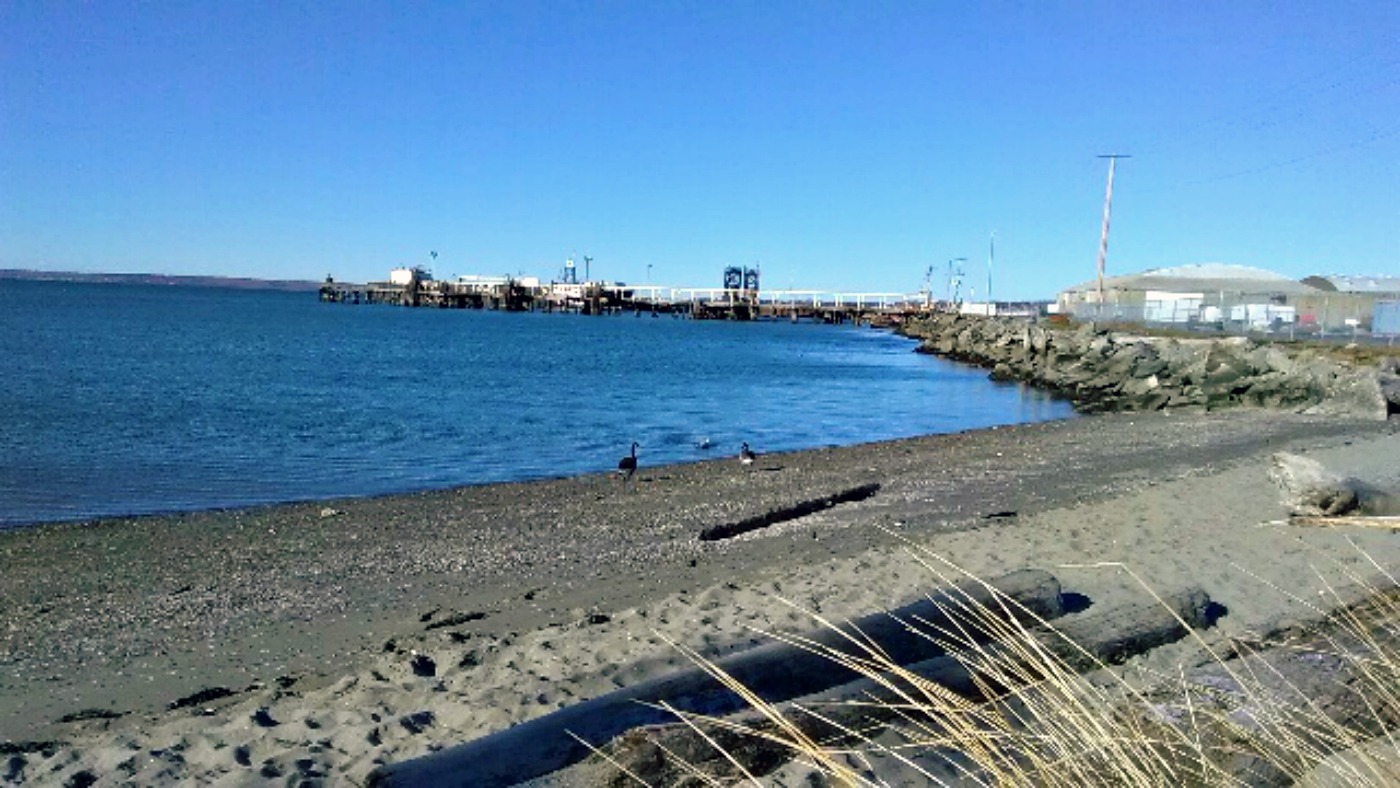
seagull scoter geese.jpg
A couple of Geese and a Gull at Bellingham Bay 1-31-17

I was dismayed recently to read of the Port of Bellingham’s new harbor lease signed with a private company to export logs and other material to worldwide destinations from the Bellingham Shipping Terminal (BST). As I understand it, the aim is to send logs and other material to China, South Korea and Japan and other markets at the discretion of the Lessee Grand Camp International LLC. The lease was signed by the three elected Port of Bellingham Commissioners and may be viewed on the Port of Bellingham website.

For many years, Bellingham along with state and federal agencies have been cleaning up pollution left behind by 100 years of industrial use in and around Bellingham Bay. More background is available at the Washington Department of Ecology site. It seems odd to me to replace dirty industry with dirty industry. The deal was signed the first week of January 2017 and is already in motion. I only read about it (thanks to Students for The Salish Sea and NoisyWaters NW groups on Facebook) after it happened.

Dec 8, 2016

World: "United States Is Turning Into a Factory Farm for China, With Devastating Environmental Consequences"


I recommend everybody take a good long look at the following article posted by Dr. Mercola at Mercola.com.  I started studying Mandarin in 1969 because I anticipated that there would be normalized relations between the USA and China, including trade, which I thought would go friendlier if some of us learned each other's language. Since China was closed (President Nixon visited China in 1972 which was a spark for opening up), everybody I knew pooh-poohed my notion. I didn't foresee the catastrophic developments that have developed from USA legislators and agencies going so overboard with normalized relations! They have been allowing devastation to rural America, the people and land/air/water, plus cruelty to so many non-human animals. In addition there is the increased cargo going over the Pacific ocean (the ocean's sustainability needs less traffic not more). I still believe in international trade and cooperation but there is no good reason for people to eat pork (cows, birds, etc.) or for Big Ag worldwide to be enabled in ruining the planet. I also don't know why the USA Treasury Department would keep the documents about the purchase of Smithfield secret. It is good there is at least one Senator awake to this problem - Debbie Stabenow (D-MI) at http://www.stabenow.senate.gov.  I hope you can study Dr. Mercola's article and view the brief videos:

Feb 16, 2014

USA: Yellowstone is a NATIONAL park slaughtering Bison by the hundreds

KOMO News 2/12/14:

Yellowstone bison slaughter begins


photo at KOMO This March 17, 2011 file photo shows Bison roaming outside Yellowstone National Park in Gardiner, Mont. (AP Photo/Janie Osborne)

Reuters on Huffington Post 2/11/14:

Yellowstone Park Considers Slaughtering Bison By The Hundreds

Reuters report is also at ReaderSupportedNews.org:

Yellowstone Park Poised to Slaughter Hundreds of Bison

Please Subscribe to this blog by Email, View in your Reader or NetworkedBlogs, Like my Page www.Facebook.com/lizardmarsh, or Follow twitter.com/lizardmarsh

May 24, 2013

World: Protecting the Marine Mammal Superhighway


From: World Wildlife Fund <ecomments@wwfus.org>
Date: Thu, May 16, 2013 at 11:10 PM
Subject: May E-news: Protecting the Marine Mammal Superhighway

Marine Mammal Superhighway | Hope for Indonesian Forests & Families | Stop Pebble Mine | Keep Our Skies Clean
View online version | Contact us
WWF May E-newsletter
WWF HOME SEND FREE E-CARDS SHARE: Facebook Twitter email   DONATE

Protecting the Marine Mammal Superhighway

Arctic
While sea ice is down, shipping and disruption are up. © Paul Nicklen/National Geographic Stock/WWF-Canada

The Bering Strait, the Arctic waterway between Russia and Alaska, is known as the "Marine Mammal Superhighway." It is also rapidly becoming a popular route for more than just polar bears, walrus, whales, and seals. As climate change melts Arctic sea ice, this waterway--like others across the region--is seeing a marked increase in shipping traffic. Because shipping can significantly affect ecosystems, WWF is taking action to ensure that development in the Arctic occurs in an environmentally and socially responsible way.

See how WWF is taking action Share: On Facebook On Twitter


More About the Arctic:

  • The region and its species, people, and threats
  • U.S. and other Arctic countries urged to create oil response plans
  • Take action to help protect America's Arctic from oil and gas drilling
  • Travel with WWF to experience the natural wonders of the Arctic


  • New Hope for Forests and Families in Indonesia

    Young trees in Indonesia
    Rice fields close to Ujung Kulon National Park, Indonesia. © Christiaan van der Hoeven/WWF-Netherlands

    On the edge of Ujung Kulon National Park--the only place in the world where the rare Javan rhino exists--you'll find Asep, a father of four, working to rehabilitate the forest. Asep didn't always have the stability he enjoys today. He fled his village in 2001 due to political unrest, leaving behind his home and rice fields--15 years of labor, lost. Today, the future looks brighter.

    Asep's story


    May Caption Contest

    Enter the WWF Photo Caption Contest and your creative caption could be featured in next month's e-newsletter.

    Southern elephant seal, Antarctic fur seal and king penguins share a beach
    "You told me this was a formal event!"
    Marc B., New York, N.Y.
    April Contest Winner


    U.S. Activists: Protect Bristol Bay from Pebble Mine

    Pebble Mine sign
    An Alaskan native protests the development of Pebble Mine in Bristol Bay. © Scott Dickerson/WWF-US

    Alaska's Bristol Bay is a national treasure. It's the ecological epicenter of the Bering Sea, which yields more than 40 percent of the wild-caught seafood produced in the U.S., and an irreplaceable stronghold for fish and wildlife. But right now its future is at risk. The largest open pit copper and gold mine in North America is proposed at the headwaters of Bristol Bay. If developed, the mine would destroy miles of salmon streams and acres of vital salmon habitat, and would require up to 10 billion tons of toxic mine waste to be stored and monitored "in perpetuity." Urge the federal government to protect Bristol Bay from the potentially disastrous Pebble Mine.

    Take action


    Urge Secretary Kerry to Clean Up Our Skies

    Blue sky
    Sign the petition to help keep our skies clean. © Frank Parhizgar/WWF-Canada

    Carbon emissions from aviation are polluting our skies at a staggering rate. They are projected to nearly double by 2030 and continue to climb unless we can adopt new, international policies to get them under control. Secretary of State John Kerry has the opportunity later this month to slash this pollution by supporting a global agreement to reduce the aviation industry's carbon emissions. By taking a leadership role on this critical issue, he would demonstrate to the world our nation's commitment to tackling climate change in the U.S. and across the globe. U.S. Activists: Urge Secretary Kerry to support a global agreement to clean up our skies.

    Take action


    FEATURED VIDEOS


    TRAVEL

    Polar bears
    The Hudson Bay is the best place to see polar bears in the wild. © Henry H. Holdsworth/wildbynaturegallery.com

    Enter for a Chance to Win a Free Trip to See Polar Bears

    Have you ever wanted to see a mother polar bear and her cubs, or a huge solitary male polar bear, ambling across the tundra? Here is your chance! In honor of 40 years of conservation work to secure a future for polar bears, WWF is giving away a Classic Polar Bear Adventure for two, courtesy of our tour partner, Natural Habitat Adventures. Come face-to-face with the world's greatest concentration of polar bears on a six-day tour in Churchill, Canada.

    Enter the sweepstakes

    Sign up for a free webinar at 3 pm ET on May 21 with Dr. Sybille Klenzendorf, managing director of WWF's Species Conservation Program, to learn about polar bear conservation. Natural Habitat Adventures staff will also discuss the experience of seeing wild polar bears.

    No purchase necessary. Open to legal residents of the 50 United States (D.C.) 18 years or older. Ends 6/30/13. To enter and for official rules, including odds and prize descriptions, visit www.worldwildlife.org/sweepstakes. Void in FL & where prohibited.


    FEATURED SPECIES

    Black-footed Ferret (Mustela nigripes)

    Black-footed ferret
    Black-footed ferrets are solitary except during breeding season. © naturepl.com/Shattil & Rozinski/WWF-Canon

    Status: Endangered

    Basics: Black-footed ferrets are about 18 to 24 inches long and weigh up to 2.5 pounds. The ferret is entirely dependent on the presence of prairie dogs and their colonies for food, shelter and raising young.

    Threats: Black-footed ferrets are one of the most endangered mammals in North America. Habitat loss, reduced prey populations and nonnative disease threaten the recovery of the species.

    Interesting Fact: In 1987, there were only 18 black-footed ferrets left on the planet. Thanks to the Endangered Species Act, which was signed into law 40 years ago today, and decades of collaborative conservation efforts by WWF, other conservation organizations, land management agencies, tribes, landowners and other partners, the population now stands at 1,000 ferrets in the wild.

    Black-footed ferret e-card Black-footed ferret wallpaper Black-footed plush and gift bag
    Send a black-footed ferret e-card Get black-footed ferret wallpaper Symbolically adopt a
    pair of black-footed ferrets


    New Headings

    New Headings

    Thanks to New Headings' support, 20% from the sale of all of their WWF products is donated to WWF's conservation work. Check out New Headings' latest additions for spring, including Comfort Panda insoles, WWF messenger bag, Thermo Frost lunch bag, and the Panda Picnic Pack. Visit New Headings' Variety Center.
    WWF Visa Signature® credit card

    Bank of America
    Is Supporting WWF


    Show your love of the tiger with the WWF BankAmericard Cash Rewards™ Visa® credit card. Cardholders earn a $100 cash back bonus after qualifying transactions. Bank of America will contribute $100 to WWF for each new qualifying credit card account. Get more details.


    DO YOU KNOW?

    Do You Know?
    An elephant's trunk has many uses--picking up objects, trumpeting warnings, greeting other elephants, drinking water, smelling, bathing and more. © WWF-Canon/Carlos Drews

    The human body has more than 600 muscles. How many muscles are in an elephant's trunk?

    a.  As many as 80,000
    b.  As many as 150,000
    c.  As many as 220,000
    d.  As many as 300,000

    Click on one of the answers above to see if you know.
    WWF HOME SEND FREE E-CARDS CONNECT: Facebook Twitter YouTube Google+   DONATE
    Contact

    © 2013 World Wildlife Fund  |  1250 24th Street NW, P.O. Box 97180  |  Washington, DC 20090-7180