Showing posts with label #wildlife. Show all posts

Feb 2, 2017

Bellingham WA: Dismayed at the Exporting of Logs

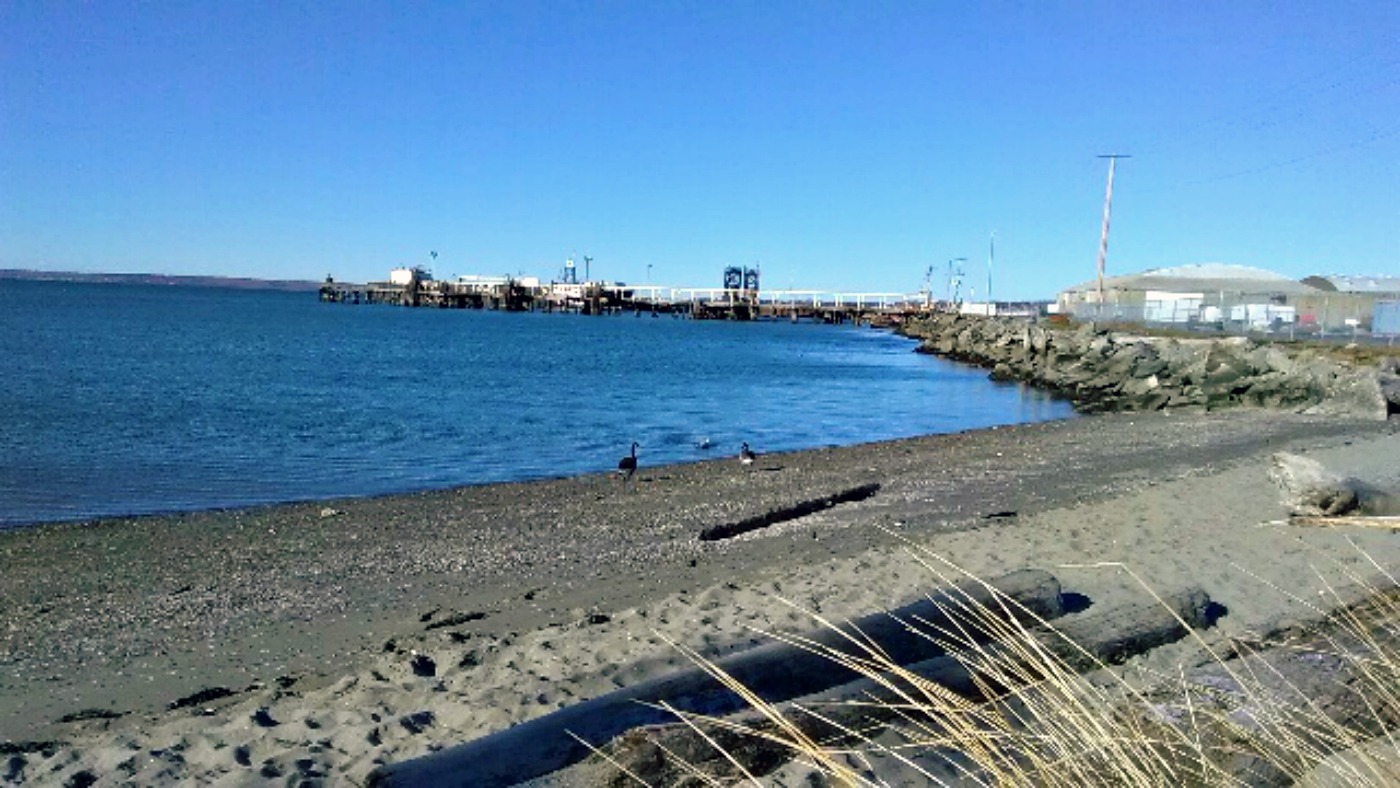
seagull scoter geese.jpg
A couple of Geese and a Gull at Bellingham Bay 1-31-17

I was dismayed recently to read of the Port of Bellingham’s new harbor lease signed with a private company to export logs and other material to worldwide destinations from the Bellingham Shipping Terminal (BST). As I understand it, the aim is to send logs and other material to China, South Korea and Japan and other markets at the discretion of the Lessee Grand Camp International LLC. The lease was signed by the three elected Port of Bellingham Commissioners and may be viewed on the Port of Bellingham website.

For many years, Bellingham along with state and federal agencies have been cleaning up pollution left behind by 100 years of industrial use in and around Bellingham Bay. More background is available at the Washington Department of Ecology site. It seems odd to me to replace dirty industry with dirty industry. The deal was signed the first week of January 2017 and is already in motion. I only read about it (thanks to Students for The Salish Sea and NoisyWaters NW groups on Facebook) after it happened.

Feb 1, 2017

WA: Legislators Consider Increased Barrel Tax To Bolster Oil Safety And Accountability

photo taken March 2, 2015 near Prosser WA
(source: WA State Dept. of Ecology)
see article at KNKX.org in link below

Legislators are trying to counter the specter of more oil spills. Please encourage these legislators! Be vigilant too when new oil projects are attempted to be shimmied through without the public's awareness. Two proposed bills are discussed (audio included) in this article by KNKX.org: http://www.tinyurl.com/h7lfe49

I noticed in watching the excellent 2014 documentary "The Great Invisible" directed by Margaret Brown that none of the safety concerns surrounding the 2010 Deepwater Horizon tragedy have been addressed by BP and the other oil companies represented by CEOs including Rex Tillerson who testified before Congressional committees. Furthermore there are even more oil rigs in the Gulf of Mexico than before the disaster. Between pipelines, oil trains, tankers, oil rigs and other dangerous activities I see in the media, I get the impression that this cavalier attitude towards safety is "the norm."

Feb 16, 2014

USA: Yellowstone is a NATIONAL park slaughtering Bison by the hundreds

KOMO News 2/12/14:

Yellowstone bison slaughter begins


photo at KOMO This March 17, 2011 file photo shows Bison roaming outside Yellowstone National Park in Gardiner, Mont. (AP Photo/Janie Osborne)

Reuters on Huffington Post 2/11/14:

Yellowstone Park Considers Slaughtering Bison By The Hundreds

Reuters report is also at ReaderSupportedNews.org:

Yellowstone Park Poised to Slaughter Hundreds of Bison

Please Subscribe to this blog by Email, View in your Reader or NetworkedBlogs, Like my Page www.Facebook.com/lizardmarsh, or Follow twitter.com/lizardmarsh

Jun 24, 2013

USA & World: Wildlife protectionists urge Obama to discuss elephant poaching in Africa

Wildlife protection is unlikely to be discussed by President Obama as he travels Africa, but it ought to be.

Click for article from ETurboNews:  Wildlife protectionists urge Obama to discuss elephant poaching in Africa

Excerpt:
TANZANIA (eTN) – The escalating crisis on the poaching of elephants and trade of bloody ivory from Africa is a priority issue in which US President Barack Obama should broach during his week-long tour of the African continent at the end of this month.Termed as a continent rich in wildlife resources, best for tourism than all other continents of the world, Africa is currently facing a poaching crisis of its wildlife resources, mostly elephants, rhinos, and lions which are in great danger of disappearing from the continent.
Image via thisisnotnatural.tumblr.com

May 24, 2013

World: Protecting the Marine Mammal Superhighway


From: World Wildlife Fund <ecomments@wwfus.org>
Date: Thu, May 16, 2013 at 11:10 PM
Subject: May E-news: Protecting the Marine Mammal Superhighway

Marine Mammal Superhighway | Hope for Indonesian Forests & Families | Stop Pebble Mine | Keep Our Skies Clean
View online version | Contact us
WWF May E-newsletter
WWF HOME SEND FREE E-CARDS SHARE: Facebook Twitter email   DONATE

Protecting the Marine Mammal Superhighway

Arctic
While sea ice is down, shipping and disruption are up. © Paul Nicklen/National Geographic Stock/WWF-Canada

The Bering Strait, the Arctic waterway between Russia and Alaska, is known as the "Marine Mammal Superhighway." It is also rapidly becoming a popular route for more than just polar bears, walrus, whales, and seals. As climate change melts Arctic sea ice, this waterway--like others across the region--is seeing a marked increase in shipping traffic. Because shipping can significantly affect ecosystems, WWF is taking action to ensure that development in the Arctic occurs in an environmentally and socially responsible way.

See how WWF is taking action Share: On Facebook On Twitter


More About the Arctic:

  • The region and its species, people, and threats
  • U.S. and other Arctic countries urged to create oil response plans
  • Take action to help protect America's Arctic from oil and gas drilling
  • Travel with WWF to experience the natural wonders of the Arctic


  • New Hope for Forests and Families in Indonesia

    Young trees in Indonesia
    Rice fields close to Ujung Kulon National Park, Indonesia. © Christiaan van der Hoeven/WWF-Netherlands

    On the edge of Ujung Kulon National Park--the only place in the world where the rare Javan rhino exists--you'll find Asep, a father of four, working to rehabilitate the forest. Asep didn't always have the stability he enjoys today. He fled his village in 2001 due to political unrest, leaving behind his home and rice fields--15 years of labor, lost. Today, the future looks brighter.

    Asep's story


    May Caption Contest

    Enter the WWF Photo Caption Contest and your creative caption could be featured in next month's e-newsletter.

    Southern elephant seal, Antarctic fur seal and king penguins share a beach
    "You told me this was a formal event!"
    Marc B., New York, N.Y.
    April Contest Winner


    U.S. Activists: Protect Bristol Bay from Pebble Mine

    Pebble Mine sign
    An Alaskan native protests the development of Pebble Mine in Bristol Bay. © Scott Dickerson/WWF-US

    Alaska's Bristol Bay is a national treasure. It's the ecological epicenter of the Bering Sea, which yields more than 40 percent of the wild-caught seafood produced in the U.S., and an irreplaceable stronghold for fish and wildlife. But right now its future is at risk. The largest open pit copper and gold mine in North America is proposed at the headwaters of Bristol Bay. If developed, the mine would destroy miles of salmon streams and acres of vital salmon habitat, and would require up to 10 billion tons of toxic mine waste to be stored and monitored "in perpetuity." Urge the federal government to protect Bristol Bay from the potentially disastrous Pebble Mine.

    Take action


    Urge Secretary Kerry to Clean Up Our Skies

    Blue sky
    Sign the petition to help keep our skies clean. © Frank Parhizgar/WWF-Canada

    Carbon emissions from aviation are polluting our skies at a staggering rate. They are projected to nearly double by 2030 and continue to climb unless we can adopt new, international policies to get them under control. Secretary of State John Kerry has the opportunity later this month to slash this pollution by supporting a global agreement to reduce the aviation industry's carbon emissions. By taking a leadership role on this critical issue, he would demonstrate to the world our nation's commitment to tackling climate change in the U.S. and across the globe. U.S. Activists: Urge Secretary Kerry to support a global agreement to clean up our skies.

    Take action


    FEATURED VIDEOS


    TRAVEL

    Polar bears
    The Hudson Bay is the best place to see polar bears in the wild. © Henry H. Holdsworth/wildbynaturegallery.com

    Enter for a Chance to Win a Free Trip to See Polar Bears

    Have you ever wanted to see a mother polar bear and her cubs, or a huge solitary male polar bear, ambling across the tundra? Here is your chance! In honor of 40 years of conservation work to secure a future for polar bears, WWF is giving away a Classic Polar Bear Adventure for two, courtesy of our tour partner, Natural Habitat Adventures. Come face-to-face with the world's greatest concentration of polar bears on a six-day tour in Churchill, Canada.

    Enter the sweepstakes

    Sign up for a free webinar at 3 pm ET on May 21 with Dr. Sybille Klenzendorf, managing director of WWF's Species Conservation Program, to learn about polar bear conservation. Natural Habitat Adventures staff will also discuss the experience of seeing wild polar bears.

    No purchase necessary. Open to legal residents of the 50 United States (D.C.) 18 years or older. Ends 6/30/13. To enter and for official rules, including odds and prize descriptions, visit www.worldwildlife.org/sweepstakes. Void in FL & where prohibited.


    FEATURED SPECIES

    Black-footed Ferret (Mustela nigripes)

    Black-footed ferret
    Black-footed ferrets are solitary except during breeding season. © naturepl.com/Shattil & Rozinski/WWF-Canon

    Status: Endangered

    Basics: Black-footed ferrets are about 18 to 24 inches long and weigh up to 2.5 pounds. The ferret is entirely dependent on the presence of prairie dogs and their colonies for food, shelter and raising young.

    Threats: Black-footed ferrets are one of the most endangered mammals in North America. Habitat loss, reduced prey populations and nonnative disease threaten the recovery of the species.

    Interesting Fact: In 1987, there were only 18 black-footed ferrets left on the planet. Thanks to the Endangered Species Act, which was signed into law 40 years ago today, and decades of collaborative conservation efforts by WWF, other conservation organizations, land management agencies, tribes, landowners and other partners, the population now stands at 1,000 ferrets in the wild.

    Black-footed ferret e-card Black-footed ferret wallpaper Black-footed plush and gift bag
    Send a black-footed ferret e-card Get black-footed ferret wallpaper Symbolically adopt a
    pair of black-footed ferrets


    New Headings

    New Headings

    Thanks to New Headings' support, 20% from the sale of all of their WWF products is donated to WWF's conservation work. Check out New Headings' latest additions for spring, including Comfort Panda insoles, WWF messenger bag, Thermo Frost lunch bag, and the Panda Picnic Pack. Visit New Headings' Variety Center.
    WWF Visa Signature® credit card

    Bank of America
    Is Supporting WWF


    Show your love of the tiger with the WWF BankAmericard Cash Rewards™ Visa® credit card. Cardholders earn a $100 cash back bonus after qualifying transactions. Bank of America will contribute $100 to WWF for each new qualifying credit card account. Get more details.


    DO YOU KNOW?

    Do You Know?
    An elephant's trunk has many uses--picking up objects, trumpeting warnings, greeting other elephants, drinking water, smelling, bathing and more. © WWF-Canon/Carlos Drews

    The human body has more than 600 muscles. How many muscles are in an elephant's trunk?

    a.  As many as 80,000
    b.  As many as 150,000
    c.  As many as 220,000
    d.  As many as 300,000

    Click on one of the answers above to see if you know.
    WWF HOME SEND FREE E-CARDS CONNECT: Facebook Twitter YouTube Google+   DONATE
    Contact

    © 2013 World Wildlife Fund  |  1250 24th Street NW, P.O. Box 97180  |  Washington, DC 20090-7180